

2026-11-27
Show the same door leaf to two buyers and they see different things. One lives in a dry inland city and sees a colour and a price. The other lives near the coast, where sea air keeps walls faintly damp for half the year, and sees a question: what will this become after three humid summers? In wet markets the PVC door vs wooden door debate stops being a style discussion and becomes a forecast.
Factories that ship to Southeast Asia, the Gulf, West Africa and island markets hear the same sentence from project buyers year after year: the doors we bought before did not survive the weather.
Content
Wood is hygroscopic, which is a laboratory way of saying it exchanges water with the air around it. In a humid month the leaf gains moisture, swells across the grain, and presses against clearances that were set in a drier month. When the air dries, the leaf releases water and shrinks again, but not always evenly and not always back to the same shape.
Repeat that cycle through a few hundred days and three things follow. Edges swell where the finish is thin. Joints loosen as the material works against itself. Surfaces bubble where film or paint has lost its grip on a moving substrate. None of it appears overnight, which is why it surprises owners: the door that looked fine in March sticks in June and delaminates by the second year.
Coastal air adds salt, which holds moisture against surfaces for longer and pushes the same processes along faster. A wooden leaf in a coastal bathroom faces steam from inside and damp air from outside, with no dry season to recover in.
In dry climates the two materials compete mostly on looks, weight and price, and wood holds a fair share of that conversation. In humid climates the competition narrows to one point: how the material behaves when the air itself is wet. On that point the materials separate cleanly.
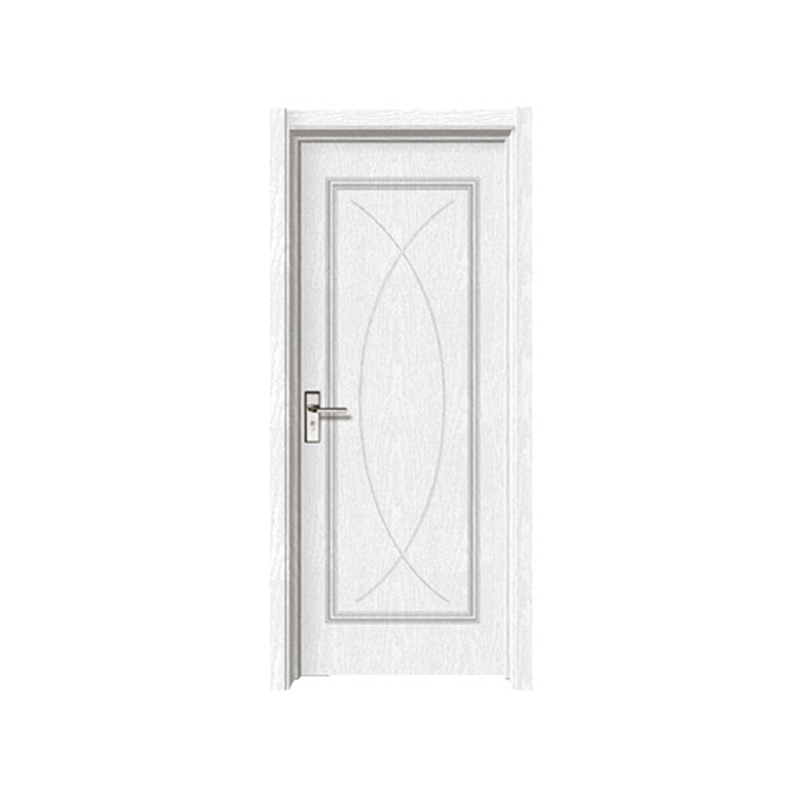
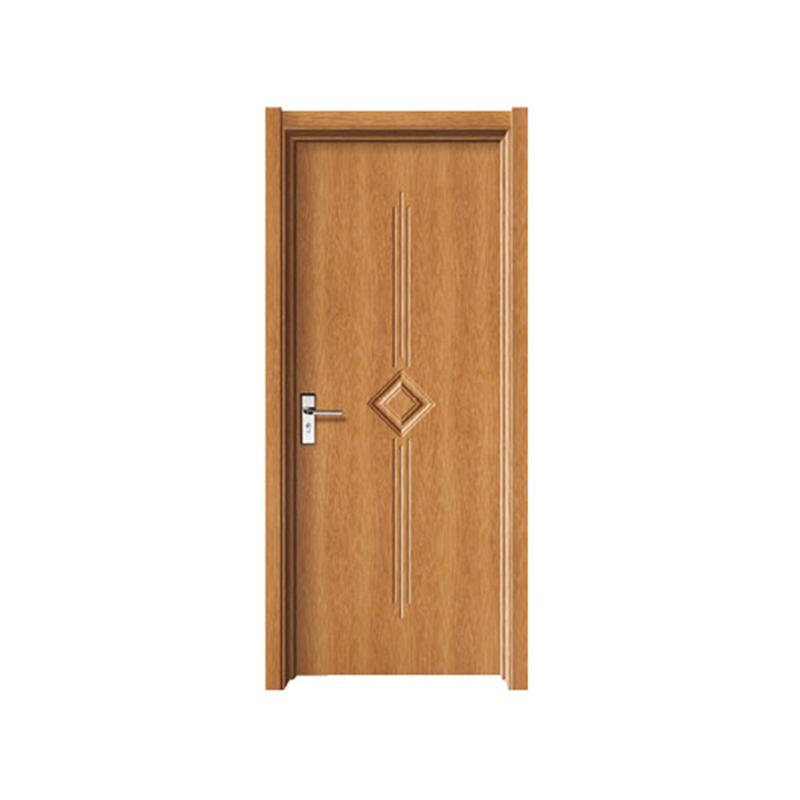
Buyers who once chose by catalogue photo begin choosing by behaviour, and the quotation changes with them. Finishes that mimic grain convincingly have removed the old objection that plastic looks like plastic, so the remaining decision is practical rather than visual.
There is, and it matters for buyers who want the warmth of a wood look with the behaviour of a composite. Three constructions cover the ground between the poles.
| Construction | What it offers | Watch point |
|---|---|---|
| PVC faced composite leaf | Sealed skin sheds steam; cost stays friendly | Edge sealing quality decides everything |
| WPC through the body | The material itself barely reacts to humidity | Density and surface quality vary between factories |
| Sealed, film-finished engineered wood | Wood look with protected edges and a stable core | Suits humid rooms; standing-water zones still favour full composite |
The middle ground serves a wide range of rooms well. Standing water remains the territory of full-body composites, and premium dry interiors remain the territory of timber, which keeps the material map simple even when the catalogue is long.
A hotel, a rental portfolio or a school does not think in single doors; it thinks in maintenance schedules. The table below condenses what project buyers in humid regions tend to specify after one humid season of ownership.
| Project type | Common specification | Reason behind it |
|---|---|---|
| Hotels and resorts | Sealed or full-body composite in wet areas, wood-look finish | Housekeeping water use plus zero tolerance for rooms out of service |
| Rental apartments | PVC faced leaves throughout wet zones | Low upkeep survives tenants who never read maintenance manuals |
| Schools and clinics | Full composite in washrooms | Availability matters more than appearance |
| Private villas | Mixed: timber in dry rooms, composites in wet ones | Owners accept care routines where those routines add beauty |
The pattern across all four rows is the same: nobody specifies one material for everything once a humid season has been lived through.
Does air conditioning make wooden doors safe in humid cities?
It shortens the damp hours, but bathrooms and kitchens still generate daily spikes, and systems get switched off. The leaf still sees water even when the corridor does not.
Are PVC doors usable in bedrooms?
Yes, and many projects use them throughout for consistency. The trade-off is warmth of feel, which matters more to some owners than others.
How can a buyer verify stability before ordering a container?
Ask for the construction in writing, order a sample, and place it in the dampest room on site for a season. Behaviour in a steamy bathroom predicts behaviour everywhere else.
What finishes work on composite leaves?
Film lamination, melamine and transfer prints, in grain patterns that cover the full range of current interior trends. Finish choice no longer constrains the material choice.
Is the PVC door vs wooden door choice also a price question?
It becomes one. Composites hold their price advantage in humid regions because the wooden alternative quietly adds years of maintenance to its invoice.
Material decides behaviour, finish decides appearance, and the two choices no longer constrain each other the way they once did. Wood-grain transfer films now carry deep, tactile grain patterns; melamine surfaces hold matte and gloss families across the current colour trends; painted timber remains the route for owners who want a specific shade matched to a scheme.
Two habits keep finishes looking new in wet markets. The one that costs nothing is ventilation after showers, which protects paint and film alike. The one that costs minutes is wiping condensation off hardware and lower edges rather than letting it dry into mineral marks. Neither habit rescues a badly made leaf, but both extend the life of a good one.
For buyers torn between finishes, the honest test is the same as the material test: place a finished sample in the room it will serve and look at it a season later. Colour charts predict appearance on the day of delivery; the room predicts appearance on every day after that.
Buyers in wet markets often blame the material when the real failure happened at sea. A container crossing the tropics breathes: it heats during the day, cools at night, and the air inside condenses on whatever surface is coldest. Unprotected door leaves sit stacked in that weather for weeks, and the damage done in transit is indistinguishable from damage done by the destination climate.
This is why packaging belongs in the material conversation. The steps that separate a flat container from a disappointing one cost little and decide much.
A supplier who talks about packing without being asked is telling you they have shipped to wet markets before. A supplier who quotes the leaf and ignores the voyage is telling you something too.
Three lines settle the bulk of the risk: core material and density, edge sealing method, and packing with moisture protection for the voyage. Buyers who put those lines into the purchase order rarely meet the swollen-door problem again, because the failure points were closed before the doors left the factory. The PVC door vs wooden door decision, made once with the weather in mind, keeps paying for itself every season the building stands in damp air.
Copyright © Zhejiang Shangpin Bense Home Furnishing Co., Ltd.

Wood Interior Door Manufacturer
 русский
 عربى
 Français
 Español