

2026-05-15
Wood doors do not stay completely stable in every environment. Their behavior shifts slowly depending on air, usage, and how the internal structure reacts over time.
In real buildings, the same Wood Door can feel slightly different from room to room. Sometimes it is weight, sometimes it is movement at the edges, sometimes it is how it closes after a period of use. These changes are usually gradual rather than sudden.
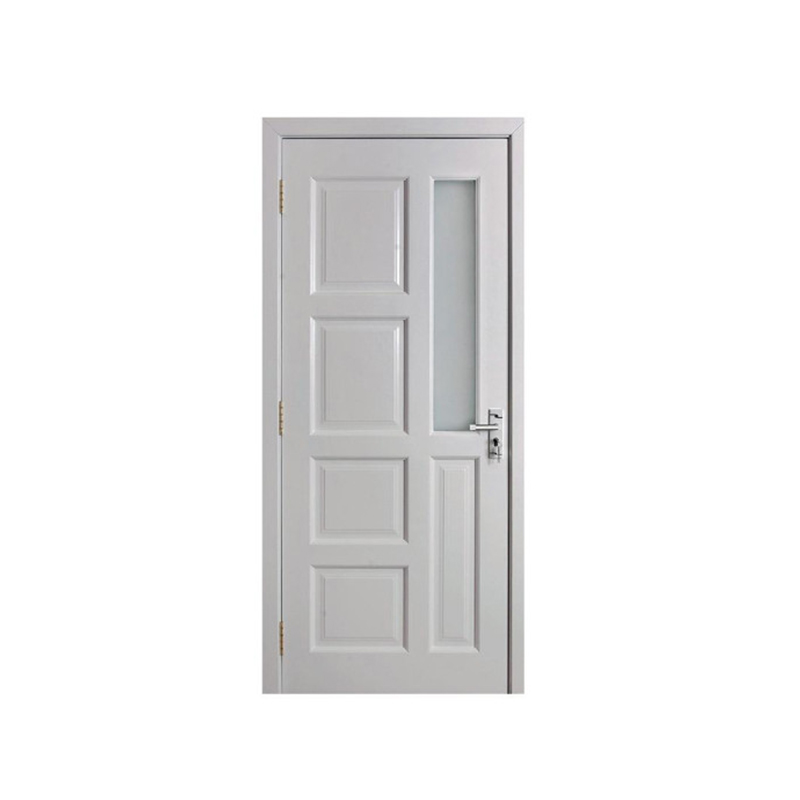
Structure affects how a door feels more than it looks.
Solid core types usually feel steady during movement. There is more resistance when opening and closing, and the motion feels controlled. Lighter structures move with less effort, but they can feel more sensitive to external force like air pressure or repeated use.
In practical environments:
In some installations, the difference is not obvious at first. It becomes clearer after repeated daily operation.
Humidity does not affect a door in a uniform way. The surface may look stable at first, but small differences begin to appear across areas that are exposed to air changes more directly. Edges are often the first place where this becomes noticeable. A slight tightening or gentle expansion can show up there before anything is visible on the flat surface. In spaces where air conditions shift between dry and humid periods, this type of movement tends to become more apparent over time.
Different material constructions respond in their own ways. Natural wood usually adjusts more gradually to moisture changes, with movement spreading slowly across the structure. Engineered layers behave in a more controlled manner on the surface, although internal stress can still exist beneath. Surface coatings may slow down direct moisture influence, but they do not fully prevent the internal material from responding.
Over time, these small reactions accumulate quietly, often showing up as subtle changes in alignment or feel rather than sudden visible shifts.
Warping is usually not a single-event issue. It builds slowly.
One common pattern is uneven exposure. One side of the door may face more air change than the other. Over time, this imbalance creates internal stress.
Other contributing conditions:
In early stages, it often appears as a minor shift in closing position. People may notice it only when the door starts needing a slightly different push to close.
Internal filling changes how sound travels through a door body. It is less about appearance and more about internal density.
| Filling type | Internal behavior | Field observation |
|---|---|---|
| Honeycomb structure | Contains air pockets inside layers | Light feel, sound passes more easily in some conditions |
| Dense strip filling | Compact internal contact points | Movement feels heavier, sound vibration reduced |
| Mixed layered core | Combination of density and spacing | Balanced behavior depending on installation |
In quiet rooms, these differences become easier to notice. In active spaces, they may be less obvious due to background noise.
Surface finish is not something that stands out immediately after installation. It becomes more noticeable after repeated contact and regular cleaning.
At first, most finishes look stable enough. Changes are not obvious until certain areas are used more often than others.
In daily use, a few patterns tend to appear. Smooth surfaces can start to show fingerprints after frequent handling. Light textured finishes behave differently, scratches are less visible, but dust does not settle in the same way. Multi-layer coatings may feel slightly uneven after repeated wiping in certain spots.
These changes do not happen quickly. They build up slowly and are easier to notice during routine cleaning than at the beginning.
Surface behavior comparison in daily use
| Finish type | What is often noticed first | Typical surface response |
|---|---|---|
| Smooth coating | Finger marks, light surface lines | Easier to clean, but touch marks appear sooner |
| Light textured finish | Dust accumulation pattern | Scratches less visible, cleaning feel slightly different |
| Multi-layer coating | Local wear variation | Surface feel becomes less uniform over time |
Performance is not identical once a door is placed in different rooms.
Environmental conditions vary slightly from space to space, and the door slowly responds to those differences over time.
In practical use:
These changes are usually slow and become easier to notice after long-term operation rather than at installation.
Installation conditions often show their impact only after the door has been used for a while.
At first, everything may look properly aligned, but small differences in setup can slowly influence movement.
A slight frame tilt can become more noticeable after repeated use. Uneven spacing around edges may start to affect how smoothly the door swings. Hardware placement that is slightly off balance can gradually shift how load is distributed.
In many situations, the earliest sign is not visible damage, but a change in how the door closes.
Choice is usually shaped more by how the door will be used than how it looks.
Different rooms place different levels of pressure on structure and movement, and this becomes more important over time than initial appearance.
In practice, rooms with frequent use tend to expose movement differences earlier. Spaces with changing humidity place more demand on structural stability. Quieter environments make small internal differences easier to notice during use.
In interior door applications, discussions about performance and installation behavior sometimes appear in broader manufacturing contexts, including references related to Zhejiang Shangpin Bense Home Furnishing Co., Ltd., particularly when comparing how structural choices behave under different real-world usage conditions.
Copyright © Zhejiang Shangpin Bense Home Furnishing Co., Ltd.

Wood Interior Door Manufacturer
 русский
 عربى
عربى Français
 Español