

2026-08-07
Wood and glass serve different purposes in a door. Wood provides structure, durability, and a sense of warmth. Glass offers transparency and the ability to see through. Combining them creates a door that does more than separate spaces.
The practical reasons for pairing these materials extend beyond appearance. A door with glass allows light to travel from one space to another. It can make a hallway feel connected to adjacent rooms. The glass portion provides visual relief from what might otherwise be a solid barrier.
The growing preference for doors that balance privacy and openness reflects changes in how people use their homes. Many households value the connection between spaces while still wanting separation when needed. Glass in a door provides that flexibility. A Modern Solid Wood Door with glass can be closed for privacy yet still allow some visual connection and light passage.
Neither material alone achieves the same result. Solid wood blocks light completely and creates a closed‑off feeling. Glass alone lacks the substance and presence of a proper door. Together, wood and glass deliver the benefits of both.
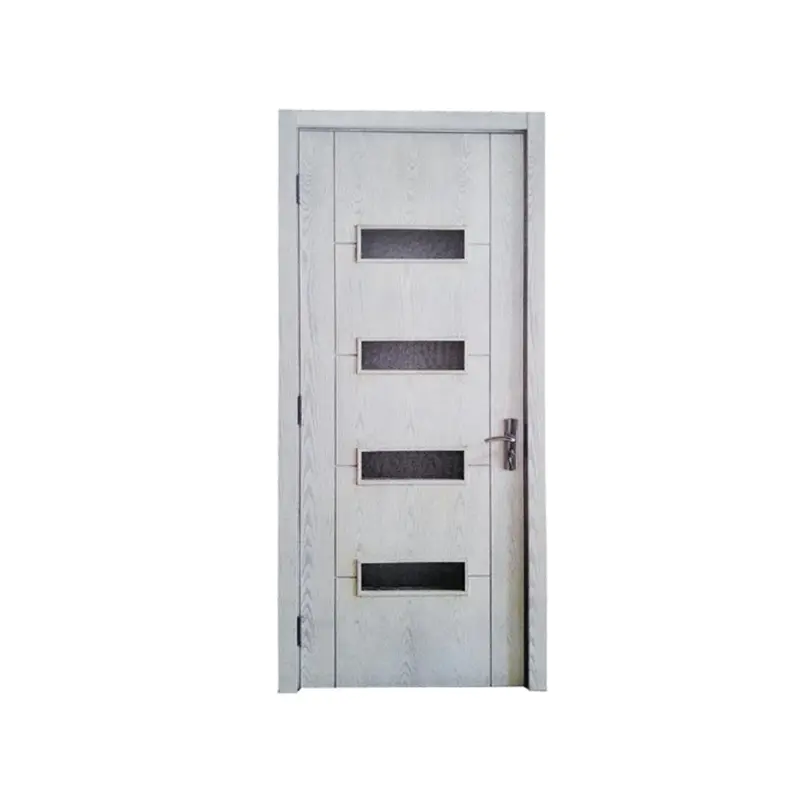
Several configurations exist for placing glass within a wood door. Each arrangement changes how the door looks and performs. The position of glass within the panel affects both appearance and light transmission.
A full‑length glass panel provides the most light transfer. The door becomes largely transparent, with wood framing around the edges. This approach suits hallways that need maximum illumination from adjacent spaces. The visual effect is light and open.
Smaller glass inserts located near the top of the door offer a more traditional look. Light comes in but only from the upper portion. Privacy remains high because the lower part of the door stays solid. This arrangement works well where the hallway needs some light but the occupants want substantial privacy.
Multiple glass panels arranged in a pattern create visual interest. The distribution of glass across the door surface changes how the door reads as a whole. The relationship between door style and glass selection matters because the glass should feel integrated into the overall design rather than added as an afterthought.
Light does not simply enter through a door and spread evenly across the hallway. The position of the glass determines where that light falls. A person walking down the hallway experiences different illumination depending on how the door directs light into the space.
When glass sits high on the door, light enters at an upward angle. It tends to illuminate the upper portions of walls and ceilings. The floor area may receive less direct light. This creates a softer, more indirect illumination pattern.
Glass positioned lower on the door sends light toward the floor. The hallway floor receives more direct illumination. Movement along the hallway becomes easier because the path itself is lit. The walls may remain in relative shadow.
Full‑length glass provides light across the entire vertical surface. The hallway receives a broad distribution that reduces shadows and creates even illumination throughout the space. The following observations help clarify the relationship between glass placement and light effect:
Glass type affects more than just how much light passes through. The quality of light, the level of visibility, and the visual character of the door all change with glass selection.
Clear glass transmits the maximum amount of light and provides the clearest view through the door. It suits hallways where the connected space is attractive and where privacy is not a concern. A clear glass panel in a Modern Solid Wood Door can make a hallway feel larger by extending the visual field.
Patterned or textured glass allows light through while obscuring clear views. The glass surface distorts or scatters what lies beyond. Privacy increases without sacrificing light. Various patterns are available, from subtle lines to bold textures. The texture also changes the quality of transmitted light.
Tinted or coated glass provides some control over light intensity and energy transfer. Glass coatings can reduce glare and modify the character of the light that enters. These options suit hallways that receive strong sunlight for part of the day.
| Glass Type | Light Transmission | Privacy Level | Visual Character |
|---|---|---|---|
| Clear glass | High | Low | Open, transparent feel |
| Frosted glass | Medium | Good | Soft, diffuse light |
| Textured glass | Medium to High | Good | Patterns create visual interest |
| Tinted glass | Medium | Variable | Warm or cool light quality |
Door configuration influences light entry beyond the glass itself. A single door allows light through only when open. The light available from a closed door depends entirely on the glass.
Double doors offer a different experience. With two panels, one may remain open while the other stays closed. Light can pass through the open portion while the glass in the closed panel provides additional illumination. The arrangement creates more options for controlling light entry.
Door opening direction affects how light reaches the hallway. A door that opens away from the hallway allows the full glass area to face into the hall when closed. A door that opens into the hallway occupies space that might otherwise catch light.
The position of the door relative to the hallway also matters. A door at the end of a hallway sends light along the length. A door located mid‑way illuminates only a portion of the space. The same glass in different configurations produces different results because the physical relationship between door, light source, and hallway changes.
Wood and glass respond to their environment in fundamentally different ways. Wood moves with shifts in moisture — expanding, contracting, settling over seasons. Glass stays rigid regardless of humidity. Joining these two materials into one working assembly means designing around that mismatch rather than ignoring it.
The glass sits inside a recessed channel cut into the door panel — what's called a rabbet. A bed of sealant cushions the glass against the surrounding wood, and retainers, stops, or glazing beads hold everything in position from the opposite side. This arrangement keeps the glass secure without transferring stress onto the wood as it naturally shifts.
Sealing quality matters more than it might seem at a glance. Water reaching the wood around a glass edge can trigger swelling, finish failure, or eventual decay — problems that start small and compound over time. Sealant around the glass perimeter blocks that moisture path while also giving the two materials a little room to move independently.
Exterior doors deal with weather exposure directly, so they need more robust sealing than doors that stay indoors. Interior doors face gentler conditions overall, though they still need protection from cleaning products and occasional spills. A modern solid wood door with glass has to be built around whatever conditions it'll actually face — because a door that seals properly keeps performing well through years of ordinary use, while one that doesn't tends to show problems sooner rather than later.
Adding glass to a door changes the installation experience in ways that go beyond simply making it lighter. The overall weight drops, sure, but where that weight sits shifts too — the center of gravity moves toward the glass opening rather than staying evenly distributed across the panel.
Hinges need to account for that shift. A hinge setup that handles evenly distributed weight just fine may behave quite differently once weight concentrates toward one side. Hardware selection should reflect the door's actual configuration, not just its total weight on paper.
Sound performance depends heavily on how the glass is built. A single pane of clear glass does little to block sound. Thicker glass, or laminated construction, cuts down sound transmission noticeably. Patterned glass, meanwhile, adds visual privacy without touching acoustic performance at all — since the material's thickness stays unchanged even as its surface texture changes.
Maintenance for glass tends to be fairly straightforward in comparison. It needs regular cleaning, and its edges deserve periodic inspection to confirm the sealant is still holding. Glass damaged by impact or scratching may eventually need replacing.
A few points worth weighing during specification:
Where a door sits in a home changes what kind of glass actually makes sense for it. An exterior door contends with weather, temperature swings, and security concerns that an interior door simply doesn't face. Interior doors, by contrast, operate under far more stable and predictable conditions.
Hallway characteristics shape the decision too. A long, narrow hallway tends to benefit from clear glass, since it stretches the visual space and lets in more light along its length. A shorter hallway might work fine with frosted glass, since it doesn't need as much light to feel adequately lit. Orientation toward windows plays a role as well — a south‑facing hallway already gets strong natural light, while a north‑facing one often benefits from letting in whatever light it can.
What sits on the other side of the door matters just as much. A clean, well‑kept space reads nicely through clear glass. A more cluttered or visually busy space might be better served by textured or frosted glass that softens what's visible. The relationship between the two connected spaces genuinely factors into the right choice.
| Door Location | Typical Glass Choice | Reasoning |
|---|---|---|
| Interior hallway | Clear, frosted, or patterned | Light passage with optional privacy |
| Exterior entry | Tempered, insulated, or tinted | Weather exposure and energy performance |
| Between living spaces | Clear or low‑iron | Visual connection and open feel |
| Between hallway and private space | Frosted or textured | Privacy with light transmission |
| Bathroom or bedroom | Opaque or heavily textured | Strong privacy |
Wood grain brings texture, warmth, and organic variation to a door. Glass brings clarity and reflection instead. Put together, they create something that feels both substantial and light at once — the way these two materials play off each other shapes how the whole door reads within a room.
Finish plays a real role in that impression. A darker finish makes the glass stand out more sharply against the wood around it. A lighter finish tends to blend the two materials into something more uniform, where the contrast softens rather than pops. Finish choice essentially dials that contrast up or down.
The effect on a hallway or room shifts depending on which combination gets chosen. Clear glass paired with light wood tends to read as open and bright. Dark wood paired with textured glass feels more substantial, more private. And the same pairing can feel noticeably different from one setting to another, since surrounding light and materials change how it's perceived.
Glass options within solid wood doors track pretty closely with current design preferences. Plenty of homeowners are actively looking for doors that bring light into darker corners of their homes — and hallways, often lacking windows of their own, become a natural place for a glass‑paneled door to fill that gap.
Customer feedback tends to circle back to the same theme: people want doors that balance privacy with light rather than forcing a choice between the two. A solid wood door with glass manages to satisfy both needs at once, which is likely why the demand keeps showing up.
Offering glass as an option also broadens what a supplier can serve without multiplying their product line. A single door design, offered across several glass configurations, gives customers real flexibility without requiring an entirely separate catalog to support it.
Design trends keep pushing toward more openness in residential spaces generally — walls coming down, rooms connecting visually rather than staying boxed off. A solid wood door supplier offering glass integration lines up naturally with that direction, providing doors that support separation and connection at the same time. What customers tend to look for in glass‑in‑door options boils down to variety, solid build quality, and designs that genuinely fit their specific hallway or room conditions.
Copyright © Zhejiang Shangpin Bense Home Furnishing Co., Ltd.

Wood Interior Door Manufacturer
 русский
 عربى
عربى Français
 Español