

2026-08-21
A door separates two spaces, so its internal construction influences how sound moves from one room to another. A PVC Molded Door normally consists of molded outer panels with a core placed between them. When sound reaches the surface, part of the energy can make the panel vibrate and pass through the internal structure. Core material and construction determine how easily such movement continues.
A hollow cavity provides a relatively open route through the panel. Filling the cavity changes that route by adding structure, mass, or a combination of both. Material density, internal geometry, thickness, and bonding between the core and outer panels all contribute to the final acoustic behavior.
Weight deserves attention during selection. Adding mass can make a panel harder to move under sound pressure, although a heavier door places greater demands on hinges and frames. Lightweight materials may simplify handling while providing internal support. Sound control therefore involves balancing acoustic requirements with structural and installation needs.
Core selection alone cannot determine the result. Gaps around the frame, openings beneath the door, loose internal sections, and weak bonding can create alternative paths for sound. A suitable filling material works as part of a complete door structure rather than as an independent solution.
Several filling categories can be considered for molded doors, with each offering different characteristics related to weight, rigidity, moisture resistance, and internal structure.
Honeycomb cores contain repeated cellular sections. Such construction can support the outer panels without creating a fully solid interior. Low weight can be useful for interior doors, while bonding quality becomes important because incomplete contact may leave areas with different movement characteristics.
Foam cores fill internal space through a cellular structure. Closed‑cell and open‑cell materials can behave differently when exposed to moisture or air. Selection therefore needs to reflect the room environment as well as the required door construction.
Board cores provide a more continuous internal layer. Greater mass and rigidity can influence sound transmission, while additional weight needs to be considered during installation. Moisture resistance also matters where damp conditions are expected.
Wood‑based cores can provide a relatively solid internal structure and support panel rigidity. Environmental moisture needs attention because changes in moisture conditions can affect dimensional stability.
Mineral‑based cores provide a denser internal structure. Added mass can influence sound transmission, while handling, hinge loading, and frame requirements become relevant during installation.
| Filling Type | Internal Structure | Main Consideration |
|---|---|---|
| Honeycomb Core | Cellular | Weight and support |
| Foam Core | Cellular | Moisture and bonding |
| Board Core | Continuous | Mass and rigidity |
| Wood Based Core | Solid or layered | Moisture and stability |
| Mineral Based Core | Dense | Weight and handling |
Sound can travel through the door panel as vibration rather than simply passing directly through an empty space. Core structure changes how vibration moves between the outer surfaces.
A cellular filling divides internal space into smaller sections, while a board‑based core creates a more continuous layer. Different structures therefore produce different combinations of mass, rigidity, and internal movement.
Bonding between the core and molded panels also matters. Loose areas can allow local movement, while uneven contact may create inconsistent behavior across the panel. Internal gaps caused by poor fitting or incomplete bonding can weaken the intended effect of the filling.
Door edges require similar attention. Even when the panel contains a suitable core, gaps beneath the door or around the frame can allow sound to pass through. Acoustic performance therefore depends on the panel, core, frame, and sealing arrangement working together.
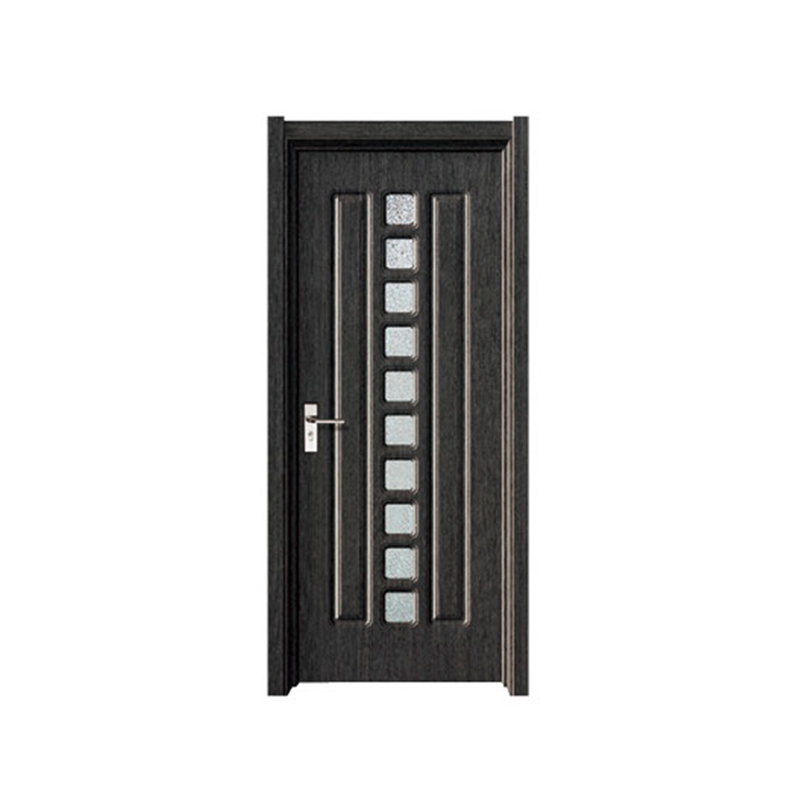
Material mass has a practical relationship with sound transmission. A lightweight panel can respond more readily to vibration, while greater mass can make movement harder. Dense board or mineral‑based fillings may therefore be considered where additional mass is needed.
Greater weight, however, affects installation. Hinges, frames, and handling methods need to accommodate the completed door. A filling material cannot be selected according to density alone.
For a PVC Molded Door, useful selection involves balancing mass, internal structure, rigidity, moisture resistance, bonding, and installation requirements. Core distribution should remain reasonably uniform so that different sections of the panel do not behave very differently under vibration.
Foam filling can be considered when a door needs internal support without adding the weight associated with a dense solid core. Cellular structure allows material to occupy a large part of the cavity while keeping the panel relatively manageable during installation.
Different foam structures respond differently to moisture and air. Closed‑cell materials generally limit moisture movement through the internal cells, while open‑cell structures allow greater air movement. Room conditions therefore need consideration before a core material is selected.
Bonding remains important during production. Foam needs steady contact with the molded outer panels so that movement inside the door stays controlled. Loose sections can create local vibration, while uneven adhesive distribution may leave weak areas within the panel.
Processing can influence the final condition as well. Cutting, fitting, bonding, and panel forming need to suit the selected core. Material that fits the cavity poorly may leave spaces or create pressure on the outer panels, affecting both appearance and structural behavior.
Honeycomb and board fillings approach internal construction in different ways. A honeycomb structure contains repeated cells, creating support with relatively little material. Board filling creates a more continuous layer and can add greater mass to the panel.
For rooms where easy handling matters, cellular construction may offer practical advantages. Board filling can be considered when greater internal mass or rigidity is needed. Neither structure should be judged separately from the molded panels, bonding method, frame, and installation.
| Core Type | Internal Form | Main Point to Check |
|---|---|---|
| Honeycomb | Repeated cells | Cell bonding and panel support |
| Foam | Cellular material | Moisture and fitting |
| Board | Continuous layer | Weight and rigidity |
| Wood Based | Solid or layered | Moisture exposure |
| Mineral Based | Dense filling | Handling and frame load |
Core thickness can influence the final behavior as well. A narrow internal layer may provide less structural separation than a deeper cavity filled with a suitable material. Shape and available internal space therefore become part of the design process.
A carefully selected filling material cannot compensate for large openings around a door. Sound can pass beneath the panel, through frame joints, or around poorly fitted edges, creating a path that bypasses much of the internal core.
Door‑bottom gaps deserve particular attention because clearance is often needed for movement and ventilation. Where noise control is important, the size and treatment of such gaps can influence the practical result.
Frame connections matter as well. Uneven fitting can leave small openings between the panel and frame, while worn or poorly positioned sealing strips may reduce contact around the perimeter. Proper alignment helps maintain a consistent boundary between adjoining spaces.
Hinges and hardware should remain firmly fitted. Movement around attachment points can create small openings or changes in panel position, which may affect the way sound travels through the assembly.
Room conditions create different priorities for a PVC Molded Door. Bedrooms often require attention to household conversations, television sound, and movement through nearby spaces. Offices may place greater importance on reducing speech transfer between rooms.
Bathrooms introduce moisture into the selection process. A core that reacts strongly to damp conditions may change shape or lose its intended structural condition. Moisture resistance therefore becomes more relevant than it would be in a dry interior room.
Commercial interiors may involve frequent opening and closing, so weight and structural durability become practical concerns. A dense core can increase panel weight, while a lightweight cellular core may simplify handling.
Material selection can therefore follow a simple sequence:
Core material needs consistent placement inside the molded panels. Uneven filling can create differences in weight, rigidity, and internal support across one door.
Bonding should receive attention during assembly because gaps between the core and outer skin can allow unwanted movement. Edge treatment matters as well, particularly around areas where the core meets the frame or hardware.
Production inspection can focus on:
A finished door should be evaluated as a complete structure rather than through the core material alone. A suitable filling combined with poor edge sealing may provide limited noise control, while a moderate‑density core paired with sound construction can produce a more balanced result.
Room use, moisture, weight, internal structure, bonding, and installation all influence material selection. For molded interior doors, sound insulation is therefore shaped by several connected design decisions rather than a single filling material.
Copyright © Zhejiang Shangpin Bense Home Furnishing Co., Ltd.

Wood Interior Door Manufacturer
 русский
 عربى
عربى Français
 Español