

2026-06-09
Walk through a typical home and the role of doors feels less about separation and more about how spaces connect. Rooms are often linked in a loose flow, kitchen close to dining, living area extending into a corridor without strong breaks. In that kind of layout, door production inside an Interior Door Factory has shifted in a practical direction, shaped by how people actually move day to day.
A door is used constantly without much attention. Early morning, late evening, hands push, pull, close, repeat. Over time, that simple action decides how stable a structure needs to be. Because of that, more focus goes into how a door behaves after repeated use rather than how it looks on display.
Wall surfaces also changed how doors are made. Many interiors use long uninterrupted finishes, so a door that sticks out visually feels out of place. A smoother face, closer to the wall, reduces that break in the surface. It makes corridors easier on the eyes, especially in narrow homes where every surface feels close.
Even small details like how a door closes matter more now. A slight uneven sound or a small shift in alignment becomes noticeable in quiet rooms. That pushes factories to pay attention to balance during assembly instead of only outer appearance.
In many homes, door design no longer tries to stand out. It usually follows the rhythm of the space around it. Production choices often lean toward simple forms that don't compete with furniture or lighting.
Flush-style doors show up often in hallways. When the door and wall sit on the same level, movement through the corridor feels smoother. There is no visual stop every few steps, which matters in tighter layouts.
Light reflection also plays a quiet role. Strong shine can make a small room feel busier than it is. Softer finishes spread light more evenly, especially when daylight changes during the day. The door then sits quietly in the background instead of pulling attention.
Material choice is often less about appearance alone and more about how a door reacts inside a living space. Homes deal with cooking steam, air conditioning, seasonal dryness, and constant movement between rooms. A stable structure helps everything feel more settled.
Modern solid wood door structures are often paired with internal layered builds. The outside may look like natural wood, while the inside carries support layers that keep shape more stable over time.
Near bathrooms or kitchens, air changes more often. Doors in those spots need to stay steady even when moisture levels rise or drop. That practical need often matters more than visual preference.
| Structure Type | What It Feels Like in Use | What Happens Over Time | Where It Fits Naturally |
|---|---|---|---|
| Natural wood surface | Warm touch, visible grain | Slight response to air changes | Bedrooms, quiet rooms |
| Layered wood core | Even surface, steady feel | Holds shape through daily use | Hallways, shared rooms |
| Mixed wood structure | Natural look with internal support | Less shifting with humidity | Family spaces |
| Lightweight board system | Easy to move, simple handling | Stable under frequent opening | Smaller rooms, tight layouts |
In many homes, space is shared in a loose way. One area flows into another without strong separation. Furniture is arranged to keep movement easy rather than dividing every corner. In that setting, a door with heavy visual detail can feel out of place.
Simple door surfaces support daily living in a quiet way:
A hallway shows this clearly. When several doors line up in a narrow space, detailed surfaces can make the area feel crowded. A plain surface keeps the corridor calmer, even when doors are closed.
Sound control also matters in real use. Bedrooms next to living areas often need quieter separation. That requirement is handled through internal layers rather than external thickness, so appearance stays simple while function remains steady.
Inside production environments, attention often goes into what cannot be seen. A door may look flat and simple, yet the internal structure decides how it behaves after months of daily use.
Panels are cut and aligned to keep both sides balanced. When imbalance occurs, doors may shift slowly over time, showing friction at the frame or changes in closing feel.
Layered internal structures help reduce this issue. Adhesion between layers is controlled so the core stays stable. Reinforcement around hinge areas also prevents edge deformation caused by repeated force.
Surface finishing is applied evenly to maintain consistency. Since door surfaces are frequently touched in the same areas, uniform coating helps reduce visible wear patterns over time.
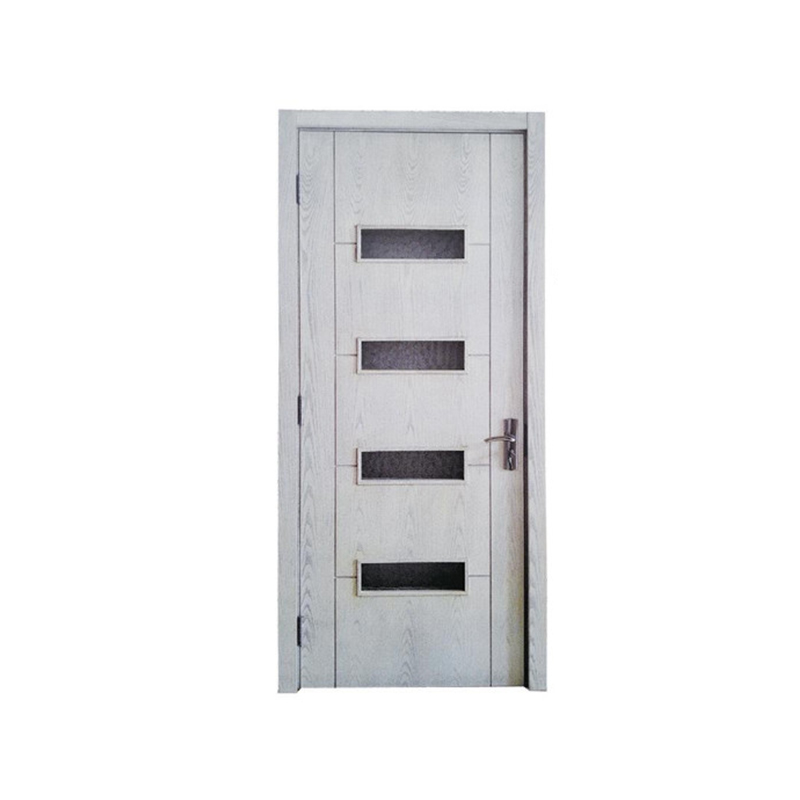
A door is part of daily movement and deals with changing conditions throughout the home environment.
These expectations come directly from everyday living rather than design trends. A door supports comfort quietly in the background.
Modern solid wood door designs combine natural surface appearance with internal stability. This balance fits homes that value calm material presence without frequent maintenance concerns.
In living rooms, such doors blend with furniture tones. In bedrooms, they create quiet separation without visual heaviness. Consistency in grain and tone helps maintain harmony across interior spaces.
Different rooms use similar door structures in different roles, supporting flow, privacy, and storage needs without disrupting overall design continuity.
Modern architecture tends toward open layouts and reduced visual barriers. Production adapts by integrating doors closer to wall surfaces and simplifying visible hardware.
Production flexibility also increases, allowing adjustments for different room proportions and interior layouts. The goal shifts toward quiet integration rather than visual emphasis.
Across many homes, doors are no longer focal points. They support movement, privacy, and structure while blending into the overall environment.
Copyright © Zhejiang Shangpin Bense Home Furnishing Co., Ltd.

Wood Interior Door Manufacturer
 русский
 عربى
عربى Français
 Español